The Supermarket Safari: Why the Local Grocery Store is the Best Museum in the World
I have a confession to make. When I landed in Tokyo for the first time, I didn't head straight for the Shibuya Crossing or the Imperial Palace. I dropped my bags at a tiny hostel in Shinjuku and walked directly into a FamilyMart. I spent forty-five minutes staring at a shelf of rice balls (onigiri) and trying to figure out which one wasn't filled with fermented plums (an acquired taste, to say the least).
I am a grocery store tourist. And if you’ve ever found yourself more excited by a weirdly flavored bag of potato chips than a historical monument, you are one, too.
In 2025, the travel landscape has shifted. We’re tired of the "tourist traps"—those souvenir shops selling the same plastic Eiffel Towers and "I Heart NY" shirts that were probably made in the same factory. Instead, travelers are looking for something real. Something that tells a story about how people actually live, eat, and spend their Tuesday nights. That story isn't found at a landmark; it’s found in the snack aisle of a Carrefour in Paris or a Big C in Bangkok.
The Psychology of the Aisle: Why We’re Obsessed
Why has #GroceryStoreTourism racked up billions of views on social media? It’s not just about being cheap (though that’s a nice perk). It’s about cultural voyeurism.
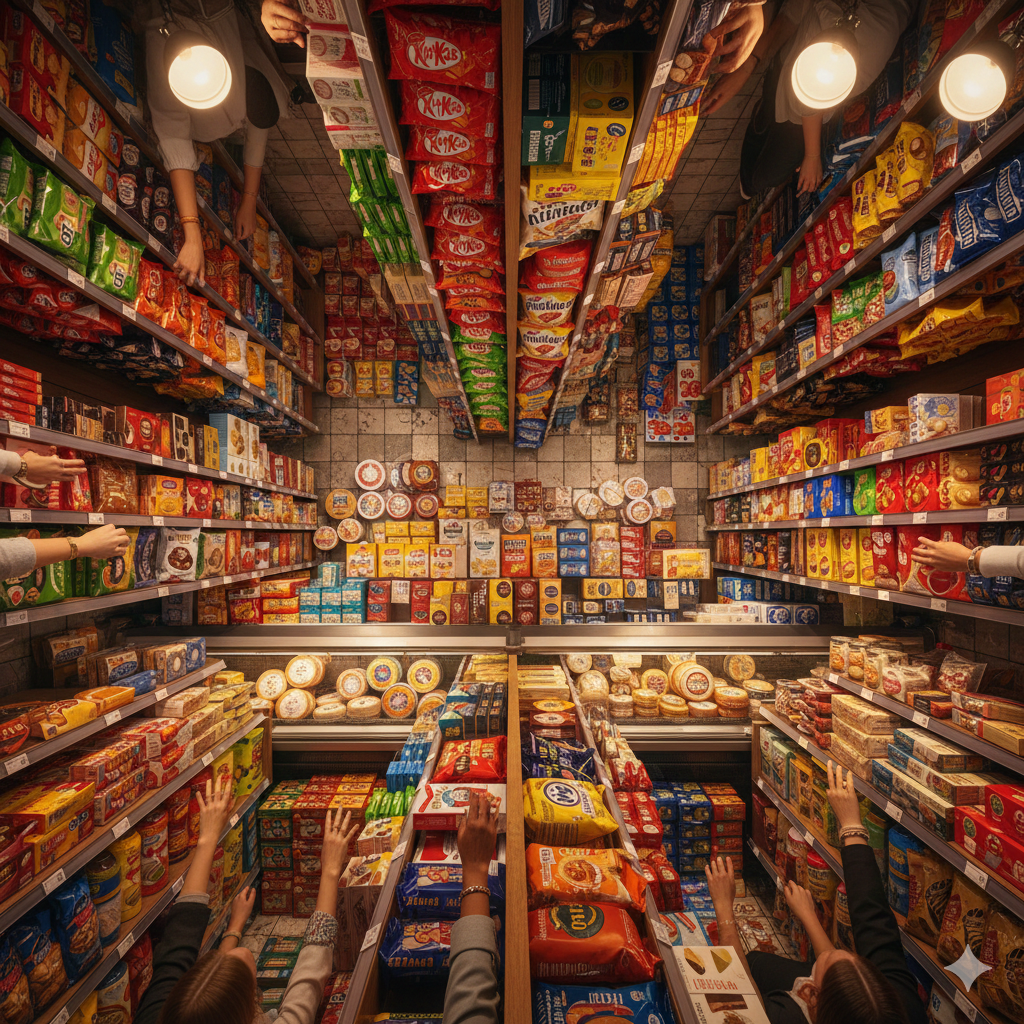
When you walk into a foreign supermarket, you’re seeing the unfiltered version of a country. You see what parents put in their kids' lunchboxes. You see what the "comfort foods" are. You see the sheer variety of flavors that a culture finds "normal." In the US, it’s Cool Ranch. In Thailand, it’s Spicy Squid. In the UK, it’s Prawn Cocktail. These aisles are a map of the local palate.
Beyond that, it’s the ultimate "budget luxury." You might not be able to afford a $300 tasting menu at a Michelin-starred restaurant in San Sebastian, but for €4 at the local Mercadona, you can buy a tin of high-end white asparagus or a bag of truffle-infused chips that will blow your mind.
Region 1: East Asia – The Heavyweight Champions
If grocery store tourism had a capital, it would be Japan. But the trend has spread like wildfire across South Korea and Taiwan as well.
Japan: The Land of the "Limited Edition"
Japan doesn't just do snacks; they do seasonal events.The Japanese concept of Gentei (limited edition) means that if you visit in April, everything is cherry blossom flavored. In October? It’s all roasted sweet potato.
The KitKat Myth vs. Reality: You’ve heard of the 400 flavors of KitKats. But don't go looking for Salmon or Wasabi unless you’re in a specialty tourist shop like Don Quijote. In a regular Seiyu or Life supermarket, look for Whole Grain KitKats or Sake-infused ones.
The Konbini Culture: While we're talking supermarkets, we can’t ignore convenience stores (Konbini). 7-Eleven, Lawson, and FamilyMart are culinary destinations.Their egg salad sandwiches (famously praised by Anthony Bourdain) are a rite of passage.
Depachika: If you want the "Final Boss" of grocery shopping, head to the basement of a department store like Isetan or Mitsukoshi.These are "food halls" on steroids. You’ll see $100 melons wrapped in silk and rows of perfect bento boxes. It’s the Louvre of food.
South Korea: The Ramen Wall
In a Korean Lotte Mart or CU, the ramen aisle isn't just a shelf—it’s a wall.
The Spicy Challenge: You’ll find the infamous Buldak (Fire Chicken) ramen in every flavor imaginable, from Carbonara to Corn.
Seaweed Everything: Korea has mastered the art of the crispy seaweed snack.Look for the ones flavored with wasabi or teriyaki. They weigh nothing, making them the perfect "I need to fit 20 of these in my suitcase" souvenir.
Region 2: Southeast Asia – Heat, Sweet, and Funk
Walking into a Big C or Tops in Thailand is a sensory overload. The smell of durian (the world’s smelliest fruit) often hits you before you even enter.
Thailand’s Crispy Secrets: Thais are the masters of the "weird" chip. You’ll find Lay’s flavors like Salted Egg, Green Curry, and KFC Fried Chicken.
The Paste Prize: If you cook at home, skip the snacks and head to the spice aisle. Small tubs of Mae Ploy curry paste cost cents compared to what you’d pay at a specialty grocer in the West, and the flavor is ten times more intense.
Dried Fruit 2.0: We’re not talking about those leathery raisins. Thai supermarkets have vacuum-sealed Durian chips (which actually taste like sweet onions/custard) and Chili-Salt Mango.
Region 3: Europe – The Dairy and Tin Revolution
European grocery tourism is all about the "picnic haul." You aren't just buying snacks; you’re buying a meal you can eat on a park bench overlooking a canal.
France: The Butter Pilgrimage
In a French Monoprix or Carrefour, the yogurt and butter section is larger than most American frozen food aisles.
The Butter: Look for Le Beurre Bordier or Isigny Ste-Mère. Even the "store brand" butter in France, if it has sea salt crystals (sel de mer), will change your life.
The Tinned Fish: "Conservas" are trending globally, but in France and Portugal, they’ve been a staple for centuries. Look for vintage-dated tins of sardines. Yes, they have "years" like wine, and they actually get better as they age in the oil.
Italy: The Cookie Culture
Italians take breakfast seriously, which usually means cookies (biscotti).
Mulino Bianco: This brand is the soul of Italy. Every Italian grew up eating Pan di Stelle (cocoa cookies with little sugar stars) or Baiocchi (hazelnut cream-filled cookies). They are bulky to pack, but worth the crushed crumbs.
Pocket Coffee: Found near the registers, these are little dark chocolate shells filled with actual liquid espresso. It’s the ultimate jet-lag cure.
Spain: The Jamón Hack
You can’t bring a whole leg of ham back to most countries, but you can buy Jamón Iberico flavored chips.They are smoky, salty, and strangely meaty for a vegan-friendly potato chip.
Region 4: The Americas – Scale and Spice
Mexico: The Chili-Lime Obsession
In Mexico’s Soriana or Chedraui, the candy aisle is a battlefield of sweet and heat.
Tamarind: Look for Pelon Pelo Rico. It’s a squeeze-bottle candy that looks like a little person with "hair" made of spicy tamarind paste. It’s a cultural icon.
Salsa: Don’t just buy the bottled stuff. Look for the dried chili section. Bags of Guajillo or Ancho chilies are lightweight and will make your home-cooked tacos taste 100% more authentic.
USA: The Land of Overwhelming Choice
For non-Americans, a Trader Joe’s or a Whole Foods is a tourist destination in itself.
Trader Joe’s Totes: Currently, the canvas tote bags from Trader Joe’s are a high-fashion item in Japan and Korea.People resell them for $50 online.
The Seasonings: Everything But The Bagel seasoning is the #1 requested gift from travelers visiting the States. It’s small, cheap, and goes on everything.
The Art of the Haul: Professional Tips
Grocery store tourism is a skill. You don't just walk in and grab a bag of Cheetos. You have to be tactical.
1. The "Camera Translate" Life Saver
Download the Google Translate app. Use the "Lens" or "Camera" feature to hover over ingredient lists. This is vital if you have allergies, but also helpful to ensure that "shrimp-flavored" snack doesn't actually contain 40% shrimp paste if you aren't ready for that level of funk.
2. Packing for Success
The "Sock Shield": If you’re buying glass jars (like jam or chili oil), slide them into a clean pair of thick hiking socks. It’s the best padding you can get.
The Ziploc Method: Air-filled chip bags will pop at high altitudes in a plane’s cargo hold. If you’re desperate to bring chips home, take a small pin, poke a tiny hole in the bag, squeeze the air out, and then seal the hole with a piece of clear tape. They won’t stay fresh for months, but they won’t explode in your suitcase either.
The "Hardside" Rule: Never put fragile snacks in a duffel bag. If you’re a serious grocery tourist, travel with a hardside suitcase to protect your "edible gold."
3. Customs: The Final Boss
This is where most dreams die. Every country has different rules, but the general "Golden Rule" is: No fresh fruit, no fresh meat, no unpasteurized dairy.
Safe: Sealed crackers, chocolate, dried spices, processed cookies, tinned fish (usually), and hard cheeses (sometimes).
Risky: Beef jerky, fresh sausages (like Chorizo), local honey, and fresh fruit.
Always Declare: If the customs form asks if you have food, say YES. If you say "No" and they find a bag of beef-flavored ramen, you could face a $500 fine. If you say "Yes" and it’s not allowed, they just take it away. No harm, no foul.
Why 2025 is the Year of the Supermarket
We live in a world that feels increasingly "samey." You can find a Starbucks in almost every city on earth. You can buy H&M clothes on every continent. But you cannot buy Biscoff-flavored ice cream bars (at least not the good ones) outside of certain European regions. You can’t find Purple Yam (Ube) Polvoron outside of a Filipino grocery store.
Grocery store tourism is a celebration of the things that haven't been homogenized. It’s a way to support the local economy in a small, direct way. It’s a way to have a conversation with a cashier who thinks it's hilarious that you're buying six jars of their local mustard.
Most importantly, it turns the mundane into an adventure. It makes a rainy Tuesday in a "boring" suburb of Brussels feel like a treasure hunt. So, on your next trip, by all means, see the cathedral. Take a photo of the statue. But then? Find the nearest supermarket, grab a basket, and get lost in the aisles.
Your taste buds (and your wallet) will thank you.