Why Does Bread Rise? The Science Behind Everyday Baking
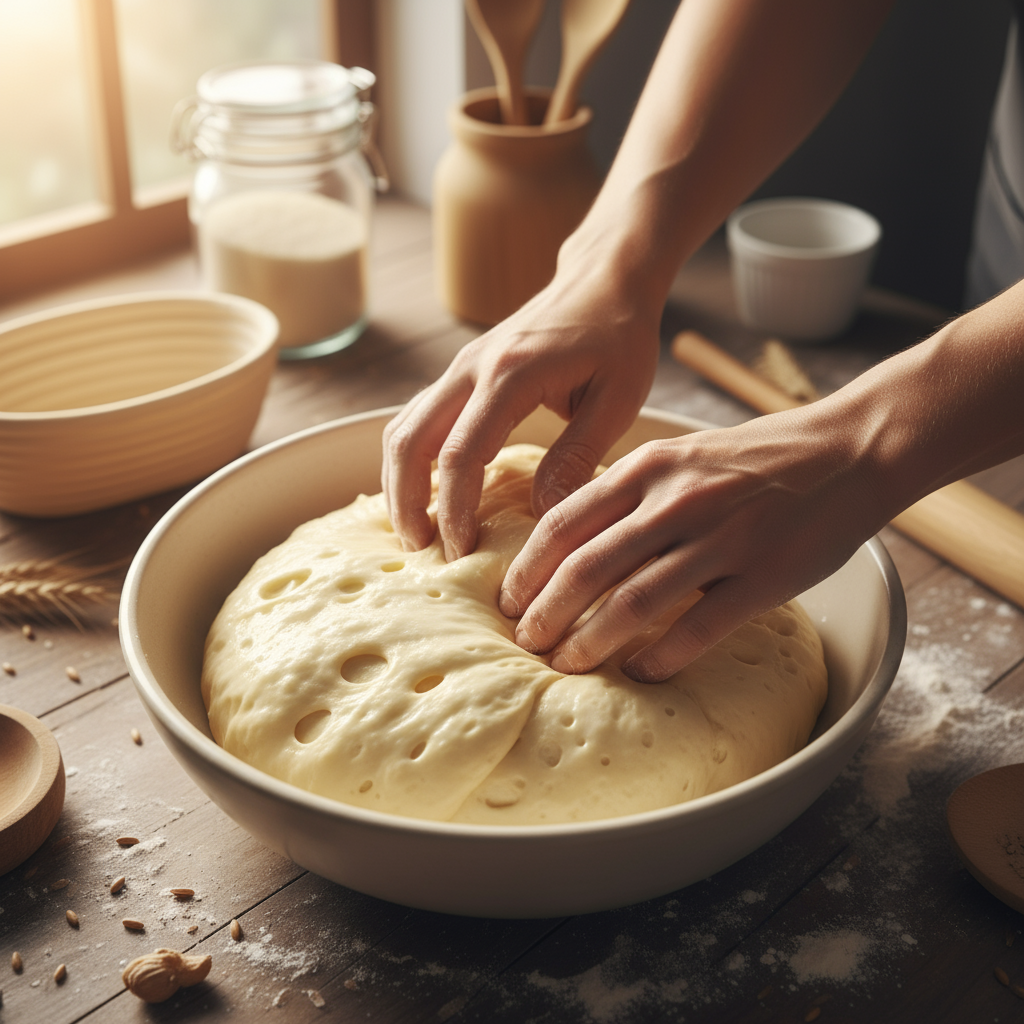
Have you ever wondered what actually happens inside your dough as it sits on the kitchen counter? One moment you're mixing flour and water, and the next, your blob of dough has magically doubled in size. It's not magic—it's science, and it's beautifully simple once you understand the key players involved.
Bread rising is driven by three main actors: yeast (a living fungus), gluten (a protein network), and carbon dioxide (a gas). When you combine them in the right conditions, you get the perfect conditions for fermentation. Let's break down what's really happening inside your dough.
The Role of Yeast: Tiny Fermentation Factories
Yeast is a single-celled fungus that's been helping bakers for thousands of years. When you mix yeast with flour and water, you're essentially creating a feast for these microscopic organisms. The yeast eats the natural sugars present in the flour—a process called fermentation—and releases two main byproducts: carbon dioxide (CO₂) and ethanol (alcohol).
The carbon dioxide is the star of the show. As yeast ferments, it produces CO₂ gas that gets trapped as thousands of tiny bubbles throughout your dough. These bubbles accumulate and expand, literally pushing the dough upward and outward. This is why your dough rises. The ethanol produced during fermentation evaporates during baking, but it contributes subtle flavors and aromas to your finished loaf.
Temperature dramatically affects how fast yeast works. The ideal temperature for most bread is around 70–75°F (21–24°C), where yeast activity is robust but not overactive. If you place your dough in a warm spot—say 80–85°F—fermentation accelerates. Put it in the fridge, and yeast activity nearly stalls. This is why bakers manipulate temperature to control rising time and flavor development. A slow, cold fermentation can take 12–24 hours and produce more complex, flavorful bread than a fast room-temperature rise.
Gluten: The Invisible Scaffolding
Here's the twist: yeast alone can't make bread rise. You also need gluten, a protein network that acts as an elastic container for all that CO₂ gas.
When you mix flour with water, two proteins in the flour—glutenin and gliadin—interact and form gluten strands. These strands organize into a weblike matrix that's both stretchy (elastic) and strong (extensible). Think of gluten as the framework of a balloon: without it, the gas would simply escape. With it, the dough can expand dramatically and hold its shape.
During mixing and kneading, you develop gluten by physically aligning these protein chains. The longer and more numerous the gluten strands, the stronger the dough's structure. This is why recipes often call for "developing gluten"—you're literally building the scaffold that will trap the yeast's gas bubbles. During bulk fermentation, enzymes in the flour further break down proteins and allow gluten chains to link together, strengthening the network even more.
The gluten network also remains active during baking. As the oven heats the dough, the gluten stretches to accommodate expanding gas bubbles. It's only when the internal dough temperature reaches around 140°F (60°C) that proteins denature (unfold) and set, permanently locking in the bread's structure.
What Happens During Proofing: Temperature and Humidity Matter
Proofing—the stage where dough sits and rises—is deceptively complex. Three environmental factors control how successfully your dough rises:
Temperature is the most critical. At 72°F, yeast activity is ideal for most breads. Every 10-degree change significantly alters proofing time. Warmer doughs proof faster; cooler doughs proof slower.
Humidity prevents your dough's surface from drying out and forming a thin skin that restricts rising. The ideal humidity level is 70–80%. In dry conditions, dough loses moisture and can't fully expand. In excessively humid environments, dough becomes too sticky to handle.
Airflow should be minimal—most recipes call for covering your dough tightly with plastic wrap or a damp towel to maintain moisture and protect it from drafts.
Oven Spring: The Final Rise
Here's where things get really interesting. Even after your dough has finished proofing, it still rises more when it hits the oven. This acceleration is called oven spring, and it's the result of multiple simultaneous effects.
When the dough enters the hot oven, three things happen rapidly:
Yeast accelerates briefly. As temperatures climb toward 130°F (54°C), yeast cells work even faster, producing additional CO₂. But this burst is short-lived—yeast dies completely once the internal dough temperature reaches 140°F (60°C).
Existing gases expand. All the CO₂ and water vapor already trapped in the dough expand as heat increases. This thermal expansion is one of the biggest contributors to oven spring.
Water evaporates into gas. The moisture in your dough converts to steam, which also expands the bubbles.
The result: your loaf can expand by 20–30% in the first few minutes of baking before the crust sets and expansion halts. Without proper proofing, fermentation, and oven conditions, oven spring fizzles. This is why a well-proofed loaf always outperforms an under- or over-proofed one.
Common Bread-Rising Myths (Debunked)
The internet is full of bread myths. Let's clear up a few:
Myth: "Homemade bread is always healthier than store-bought." Not necessarily. The nutrition of bread depends on the ingredients used, not who made it. A homemade loaf made with white flour and sugar isn't nutritionally superior to a store-bought whole-grain loaf. Choose recipes with whole grains, seeds, and minimal added sugar for a genuinely nutritious loaf.
Myth: "Bread makes you bloated." There's no scientific evidence that bread causes bloating or digestive discomfort in people without gluten sensitivity. Bloating is often linked to eating too quickly, poor diet quality, or hormonal factors—not bread itself.
Myth: "You need a bread machine or fancy equipment to make good bread." False. The simplest breads—like no-knead bread—require just flour, water, salt, and time. A Dutch oven and your kitchen counter are all you need.
Comparing Bread-Rising Methods
Method | Typical Proofing Time | Temperature | Flavor Profile | Best For |
Warm, ambient proofing | 2–4 hours | 75–80°F | Mild, subtle | Quick weeknight baking |
Room-temperature proofing | 4–8 hours | 68–72°F | Balanced | Standard recipes |
Cold retard (fridge) | 12–48 hours | 38–40°F | Deep, complex | Sourdough, artisan loaves |
No-knead (long fermentation) | 18–24 hours | 65–72°F | Rich, tangy | Minimal-effort rustic bread |
FAQ: Your Bread-Rising Questions Answered
Q: Can bread rise without yeast?
A: Yes, using baking soda or baking powder as chemical leavening agents. These produce CO₂ through chemical reactions rather than fermentation. However, the flavor and texture will differ—chemical-leavened breads tend to be denser and less chewy. Yeast also develops deeper flavors during long fermentation.
Q: Why did my dough not rise at all?
A: Several culprits: dead yeast (expired or overheated), dough too cold, insufficient proofing time, or weak gluten development. Always check your yeast's expiration date, proof in a warm (not hot) spot, and ensure adequate mixing to develop gluten.
Q: What is "overproofing," and why does it ruin bread?
A: Overproofing occurs when dough rises too long. The gluten network becomes over-extended, and gas bubbles merge and rupture, allowing gas to escape. The result is a flat, dense loaf with poor oven spring. To avoid it, check your dough's progress visually—it should look puffy but not sunken or deflated.
Q: Does kneading really matter, or is it optional?
A: Kneading (or stretch-and-fold techniques) develops gluten, but it's not always mandatory. No-knead breads use time and gentle folding instead of vigorous kneading. However, if you want a chewy, airy crumb, developing gluten—via kneading or folding—is essential.
Q: Why do bakers fold dough during bulk fermentation?
A: Folding stretches and realigns gluten strands, strengthening the dough's structure without the intensity of traditional kneading. It also introduces a small amount of oxygen, which aids gluten development. Studies show that folded doughs rise higher and hold their shape better than unfolded doughs.
Q: Can I skip proofing and bake right away?
A: You'll end up with dense, tough bread with minimal oven spring and little flavor development. Proofing allows fermentation to create flavor compounds and CO₂, and it develops gluten. At minimum, an hour or two of proofing significantly improves results.
Why This Topic Matters for Home Bakers
Understanding bread science transforms you from a recipe-follower into a confident baker who can troubleshoot problems and adapt recipes to your kitchen's unique conditions. If your kitchen is cold, you now know to adjust proofing time or temperature. If you want deeper flavor, you can experiment with longer fermentation. If your loaves are flat, you recognize the signs of overproofing and can adjust accordingly