Mocktail Recipes & Zero-Proof Drink Ideas You’ll Actually Make
Disclaimer: This article is for informational purposes only and does not offer medical advice. If you drink alcohol, do so responsibly. For health guidance on alcohol risks, see the World Health Organization.
Mocktails aren’t just for Dry January anymore—they’re a worldwide trend. Sales of no- and low-alcohol drinks are growing faster than traditional alcohol, with no-alcohol alone up about 9% in 2024 and forecast to keep climbing through 2028 (IWSR). Social buzz plays a huge role: hashtags like #mocktail and #mocktails have racked up billions of views on TikTok, showing just how international the appeal is (#mocktail, #mocktails). Interest spikes every January and again in the summer as people look for festive, alcohol-free options (Morning Consult).
The best part? You don’t need a fancy back bar or expensive bottles to make drinks people actually want to sip. With a few simple ratios, global flavor swaps, and some clever batching tricks, you can build zero-proof cocktails that feel thoughtful—without the sticky grenadine clichés.
The Formula Behind a Great Mocktail
Skip the complicated recipes. Most balanced mocktails come down to one ratio you can remix endlessly:
2 parts base (juice, tea, or a non-alcoholic spirit)
1 part tart (fresh citrus or a vinegar shrub)
2–3 parts bubbles (soda, tonic, ginger beer)
Sweetener only if needed (0.25–0.5 part syrup or honey)
A pinch of salt, a dash of bitters (alcohol-free if you’re strict), or strong tea/coffee adds complexity. Finish with texture—pebble ice for refreshment, or aquafaba for foam if you want a “cocktail bar” feel.
This ratio works anywhere in the world because you can swap ingredients locally: calamansi for lime, jaggery syrup for simple syrup, sparkling coconut water for club soda. It’s flexible, affordable, and season-proof (IWSR global growth context).
Five Easy Mocktails (Three Ingredients Each)
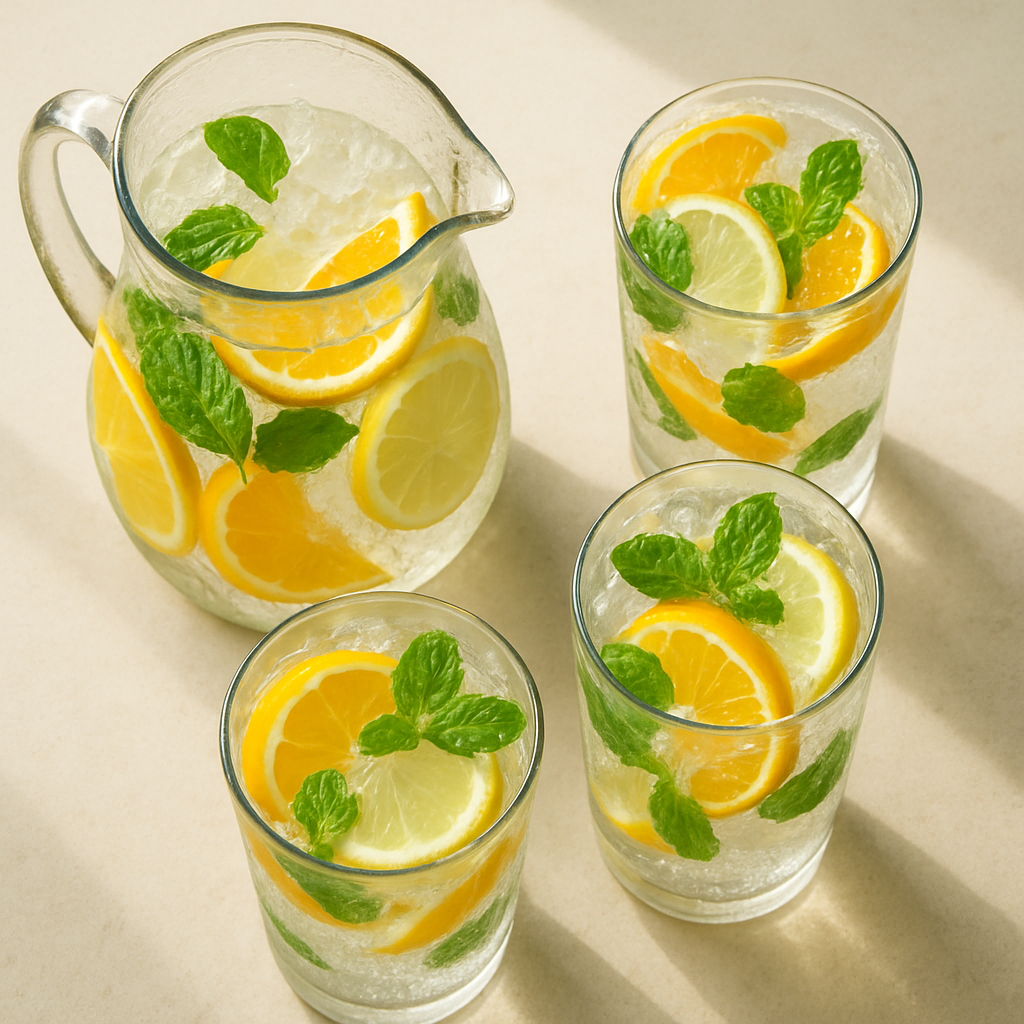
1. Citrus Highball
60 ml lemon/lime/orange juice
15 ml syrup (optional)
120–180 ml soda or tonic
Swap ideas: Lime + salted rim (Mexico), calamansi + soda (Philippines), blood orange + tonic (Italy).
2. Non-Alcoholic Spritz
60 ml non-alcoholic aperitivo (like Lyre’s Italian Orange)
90 ml soda or alcohol-free sparkling wine
Orange slice garnish
The bitterness is what makes it taste like an “adult” drink.
3. Ginger-Mint Cooler
Mint leaves, gently muddled
30 ml lime juice
150 ml ginger beer
Batch: 1 L ginger beer + 200 ml lime juice + mint bouquet ≈ 6 servings.
4. Tea & Tonic
90 ml chilled strong tea (Earl Grey, jasmine)
120 ml tonic water
Lemon twist
Tea tannins give backbone similar to alcohol.
5. Shaken Espresso “Martini”
60 ml fresh espresso or cold brew
10–15 ml vanilla/simple syrup
Ice, shaken hard → strain into coupe
Optional: 15 ml non-alcoholic dark spirit, or aquafaba for foam.
Global Flavor Swaps
Think of mocktails as modular. A few ingredient swaps make them instantly local:
Sours: lime ↔ calamansi ↔ sudachi ↔ verjus
Sweeteners: simple syrup ↔ honey ↔ agave ↔ jaggery syrup ↔ date syrup
Herbs: mint ↔ basil ↔ shiso ↔ rosemary
Bubbles: soda ↔ tonic ↔ ginger beer ↔ sparkling coconut water
Accents: non-alcoholic bitters, citrus zest oils, pinch of salt
Hosting Hacks: Batch Math That Works
Dilution: Add ~10–15% cold water to pre-batched sours. This mimics the dilution from shaking.
Citrus: Juice same day; cover and chill.
Tea/Coffee: Brew ahead and refrigerate.
Carbonation: Always add soda/tonic at serving to keep fizz alive.
Batched drinks are where mocktails shine—search traffic consistently spikes around holidays and parties, when people want big-batch recipes that still feel special (IWSR holiday context).
Non-Alcoholic Spirits vs Pantry Staples: Which to Use?
Option | What It Is | Pros | Cons | Best Use |
Non-Alcoholic Spirits (aperitivos, “gins,” dark blends) | Distilled to mimic alcohol | Complex, plug-and-play, impressive for guests | Expensive, hit-or-miss flavors | Spritzes, zero-proof “Negroni,” G&T |
Pantry Staples (juice, tea, coffee, soda) | Everyday items | Cheap, global, easy to batch | Can skew sweet if unbalanced | Weeknight drinks, family gatherings |
Non-Alcoholic Beer/Wine Mixers | Non-alcoholic beer/wine + citrus/soda | Authentic texture & fizz | Quality varies; check sugar levels | Shandies, spritzes, casual pours |
Non-alcoholic beer, in particular, is booming globally and now represents the second-largest beer “category” by volume (Food & Wine).
Quick Occasion Recipes
Weeknight: Mango Lime Soda (90 ml mango nectar + 30 ml lime + soda, pinch of salt)
Brunch Pitcher: Jasmine-Cucumber Spritz (jasmine tea + cucumber juice + lime + soda at serve)
Cookout: Non-Alcoholic Shandy (non-alcoholic IPA + lemon juice + honey + soda)
Dinner Party: Bitter Orange Spritz (non-alcoholic aperitivo + orange juice + sparkling water)
Dessert: Coffee-Tonic Float (cold brew + tonic + pinch salt + vanilla ice cream)
FAQ
Is zero-proof automatically “healthier”? Not always. Sugar and portion size matter. For evidence-based info on alcohol risks, see the WHO.
Are bitters alcohol-free? Most aren’t. Look for alcohol-free versions or skip them if you’re avoiding alcohol completely.
Best sweetener? Use what’s on hand: honey, agave, jaggery, or syrup. Start small and adjust.
Can I juice citrus ahead of time? Yes—just cover and chill. Add bubbles right before serving.
Foam without egg whites? Aquafaba (chickpea liquid) works perfectly—about 15 ml per drink.